An interview with two purveyors of gay historicals, expanded from the original which appeared in the Romantic Novelists Association magazine, considering the differences (and similarities) between straight and gay romances written within a historical setting.
Charlie: I suppose the first difference in gay romance is the general lack of bodices. I mean, many of my characters have them but none actually get ripped. How about your gals?
Alex: Well, Emily certainly has one and mentions it in Captain’s Surrender, but her beau is too nice a guy to spoil a good dress. But yes, Captain’s Surrender is the only one of my books (so far) where I’ve had a male/female romance as a sub-plot to the male/male. Having said that, Victor Banis’s Lola Dances features a cross dressing gay man, so I wouldn’t rule bodice ripping out entirely. Breeches ripping certainly happens (I believe I even have a breeches ripping scene in False Colors,) but I wouldn’t say that represented the entire genre. I couldn’t see your kind and gentle young men dealing out violence to each other – even to each other’s clothes.
Maybe it’s the extent of having a wide variety of heroes and not putting as much emphasis on the overpowering nature of the hero that makes gay romance not “your mother’s romance”? What do you think?
Charlie: I think romance in general has moved on from my mother’s day and there’s a wide variety of heroes in gay and straight historical romance. Maybe one of the main differences is that we can’t have a “traditional” happy ending for our leading men. No “Reader, I married him,” moment, no big wedding or even engagement. The best we can do is to find some situation in which they can try to live together without being shunned by society or reported to the police. My Edwardian lads are living under the shadow of the fairly recent Oscar Wilde trials; at least they have a Cambridge single sex college to live in so they can hide in plain sight. My Age of Sail lads hide their relationship behind a close friendship. How do you solve the problem?
Alex: That’s very true about romance moving on. There’s really something for everyone’s tastes, these days. But yes, it certainly presents an interesting problem, finding a happy ending which has the weight of a marriage in an era when our heroes could have been imprisoned or even executed it their relationship was suspected. I think the male/male equivalent of the wedding is the point where the characters make a commitment to face whatever might come in the future together. They may figure out a cover story which enables them to live together without arousing suspicion, or they may simply make that commitment to each other, leaving the reader to deduce from their prior adventures that they are cautious and clever enough to get away with it.
Of course, the lack of a socially sanctioned wedding doesn’t mean that they can’t privately offer one another similar vows. They can have every bit of the same emotional impact. Even more so, perhaps, since the reader knows what an act of love in the face of all odds they represent. I know too that there are some readers of gay romance who might regard the traditional Happy Ever After = marriage ending as worryingly heteronormative. What are your thoughts on that?
Charlie: I think you’ve made a great point and, again, one that applies to straight romances, where a big white wedding isn’t necessarily everyone’s idea of the “must have” happy ending.
Another aspect of romances is the “tension along the way”, you know, the complication/estrangement that has to be overcome en route to the HEA. I suspect that’s an area where gay fiction has an inbuilt advantage, especially historical, as the relationship was illegal and generally viewed as immoral. Actually, in some parts of the world either or both of those would apply today.
Of course, that doesn’t mean we can be lazy and just use the ‘how do we avoid discovery’ as our only cause of dramatic tension; we have arguments, misunderstandings, temptations, all the story threads that crop up in straight romances. What’s your favourite “boy temporarily loses boy” moment from your books?
Alex: I’d say it was the incident in John’s cabin in False Colors, just after the ship has almost sunk in the Arctic. The two heroes have been alternately pursuing each other and spurning each other for a while now, and Alfie, feeling terribly bitter due to bereavement and misunderstanding, makes an absolutely disastrous attempt on John’s virtue in order to teach John a lesson. John – who’s a highly strung mixture of very sensitive and very proud – realizes that Alfie is doing this to put him in his place and goes ballistic with outrage. It’s hard to explain in one paragraph, because there’s a whole book of misunderstandings and hurts that lead up to it, but it’s simultaneously their lowest ebb, and a sign that things are beginning to thaw between them and that there’s hope there still.
How about you?
Charlie: I’ve got two. One of them’s in my ongoing Cambridge Fellows series, where Jonty and Orlando finally seem to have settled into a nice, comfortable “looks to the outside world like a bachelor existence”, only for some awful events from Jonty’s past to rear their heads. The lads have to work through a lot of emotional and ethical complications together, but emerge stronger. The other’s a bit more light hearted, from an Austenesque short story, The Shade on a Fine Day, where it needs ghostly/angelic intervention to get my leading man to pluck up the courage to act.
It’s been fun picking your brains – anything you want to add about the differences you’ve found between gay and straight historical romance?
Alex: How long have we got? It’s an interesting topic and I’m glad we got to talk about it. I’m inclined to cheat on this last question, though, and say that despite any differences occasioned by the fact that you’ve got two men instead of one man, one woman, still the ways in which they are similar outnumber the differences. After all, a romance is about two people falling in love and committing to that relationship despite the problems they face. The external problems the characters face may be incomparably greater due to society’s disapproval, but internally I don’t think that love is any different. Nor is the process of two independent personalities learning to live with each other any less complex when it’s two men (or two women) together instead of one of each.
Wild Bells, two historical novellas by Charlie Cochrane.

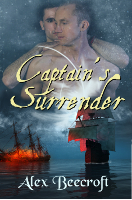
Captain’s Surrender by Alex Beecroft
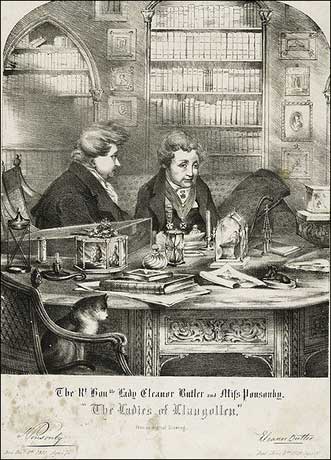 Extraordinary Female Affection was the title of a 1790 newspaper article on two female friends, Miss Sarah Ponsonby and Lady Eleanor Butler, who had defied convention by running away to live together.
 JL Merrow is that rare beast, an English person who refuses to drink tea. She read Natural Sciences at Cambridge, where she learned many things, chief amongst which was that she never wanted to see the inside of a lab ever again. Her one regret is that she never mastered the ability of punting one-handed whilst holding a glass of champagne.
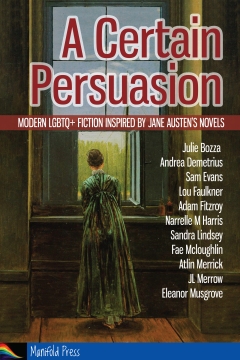 JL Merrow is the author of “A Particular Friend” which appears in A Certain Persuasion, a new anthology of stories set in and around the writings of Jane Austen, featuring LGBTQIA characters, which was released on 1st November.
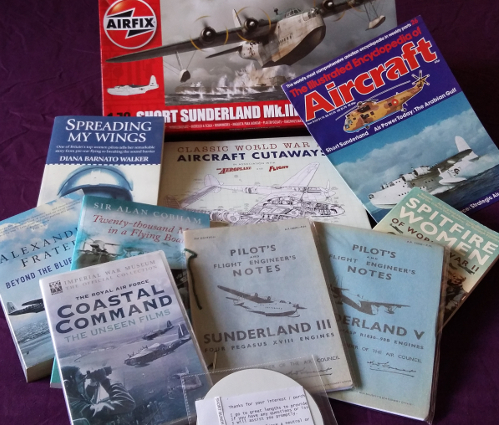
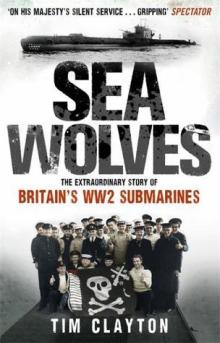 I’ve just finished reading Sea Wolves by Tim Clayton with a view to rewriting my WWII submarine story ‘Under the Radar’ for possible submission.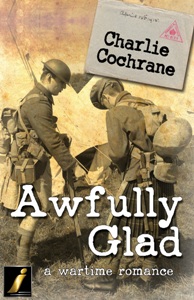



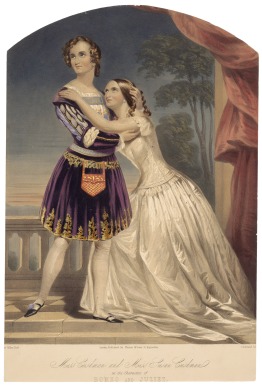 London theatre audiences of the time were notoriously conservative—after all, it was only 40 years since Sarah Siddons, playing Lady Macbeth, had caused a sensation by putting down a candlestick when tradition dictated it should be held throughout a scene. Playwright Richard Sheridan was apparently so horrified by the prospect he actually visited her in her dressing room to try to get her to abandon such a dangerously avant-garde idea, although he changed his mind when he saw the performance.
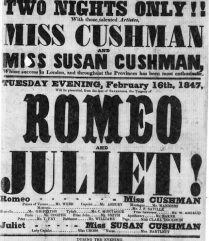 And in fact the casting brought a whole new dimension to the role. Charlotte Cushman’s masculine femininity was well suited to playing a young man whose masculinity was perceived as having something effeminate about it. Romeo’s immaturity, and in particular his emotional immaturity, led the role to be seen as one not easily portrayed by a mature male actor of the era—or at least, not without embarrassment. Women, however, were popularly supposed to be naturally over-emotional and impetuous, and so a woman’s portrayal of the young lover was, in some ways, actually more credible to nineteenth-century audiences.




 JL Merrow is that rare beast, an English person who refuses to drink tea. She read Natural Sciences at Cambridge, where she learned many things, chief amongst which was that she never wanted to see the inside of a lab ever again. Her one regret is that she never mastered the ability of punting one-handed whilst holding a glass of champagne.






 The Macaronis